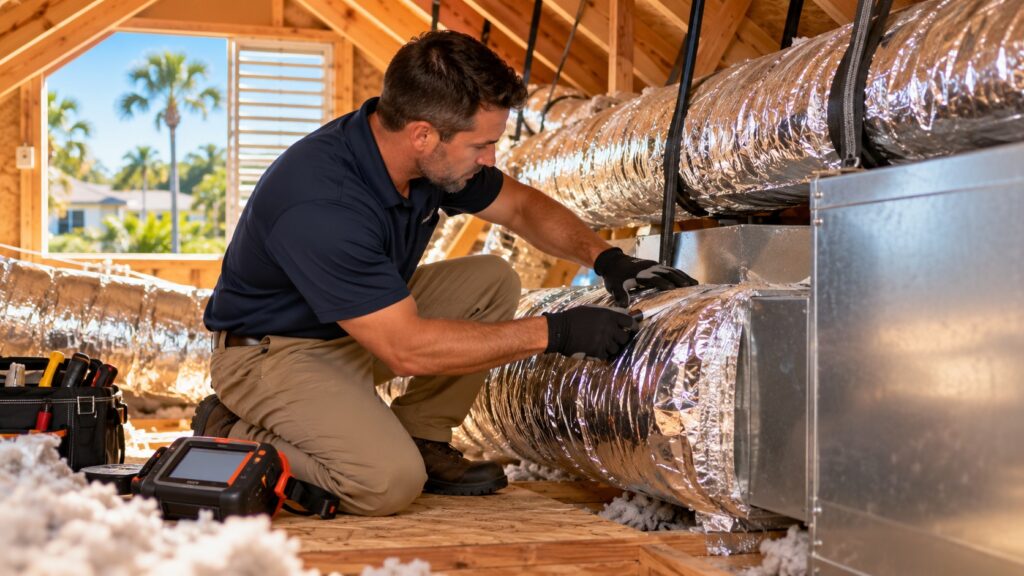
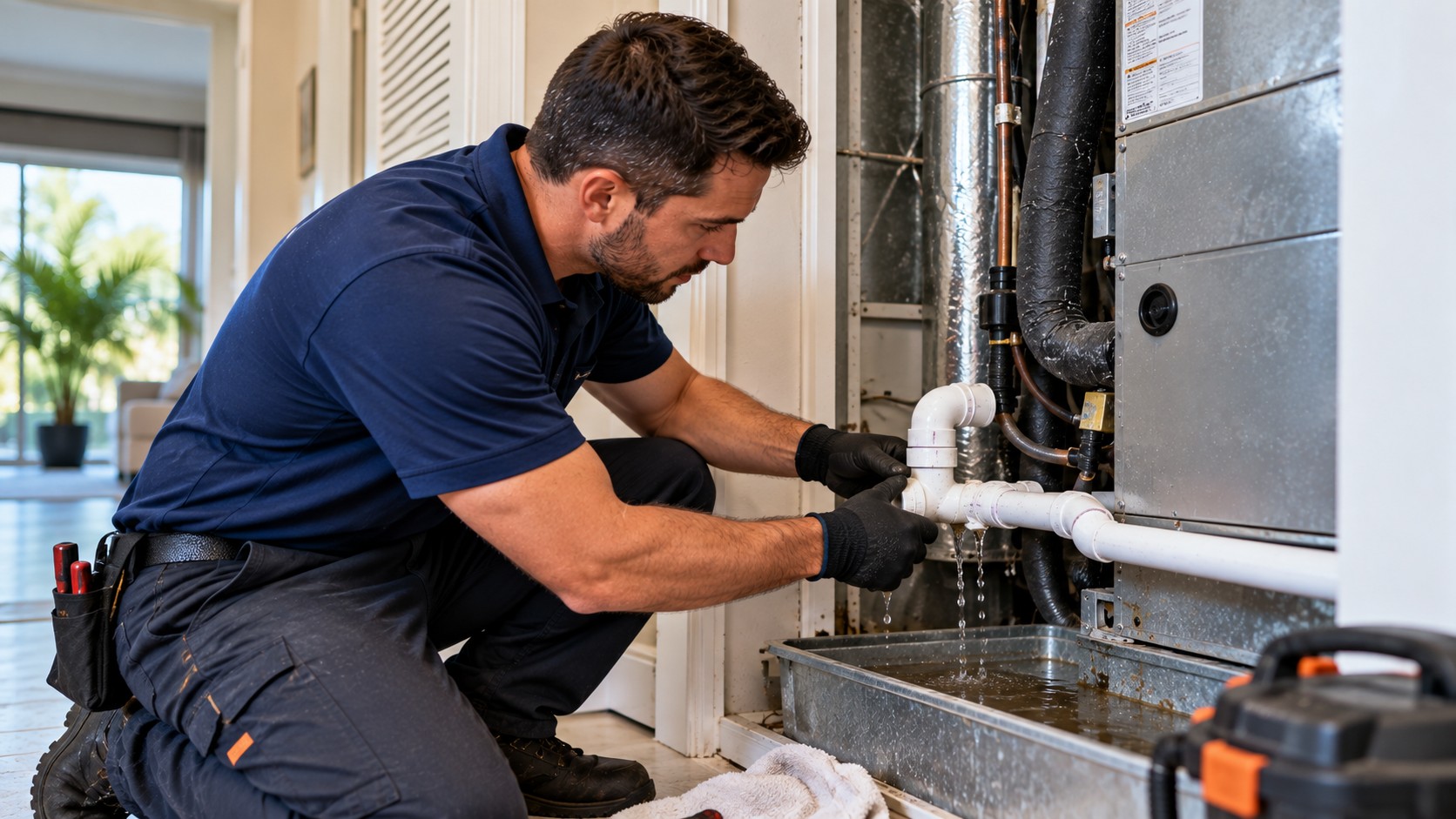
Finding water around your indoor air conditioning equipment can be alarming, especially in Central Florida where the AC may run for much of the year. The good news is that an AC water leak does not always mean the entire system has failed. The bad news is that ignoring the moisture can lead to damaged ceilings, flooring, drywall, insulation and HVAC components.
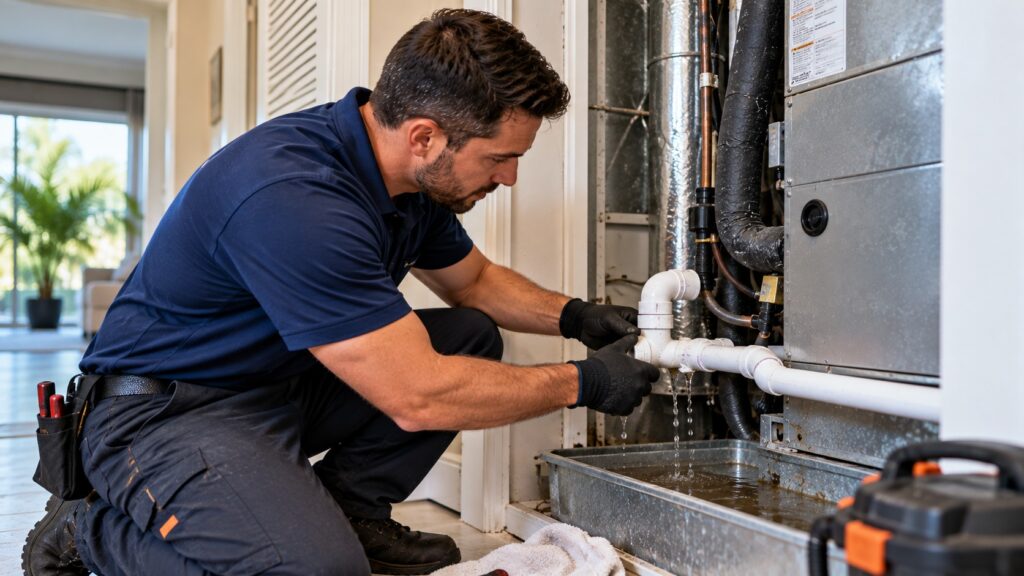
A clogged or damaged condensate drain can turn normal AC moisture removal into a water leak inside your Florida home.
One of the most common sources is the condensate drainage system. Your air conditioner removes moisture from humid indoor air as it cools your home. That moisture has to leave the system safely. When the drainage path is blocked or another component is not operating correctly, water can end up where it does not belong.
Why Your AC Produces Water in the First Place
Warm, humid air from your home passes over the cold evaporator coil. As the air cools, water vapor condenses on the coil. The moisture falls into a drain pan and travels through a condensate drain line to a safe discharge point.
In Florida, this process can produce a significant amount of condensation because humidity levels are often high and cooling systems operate for long periods. That makes proper drainage especially important.
1. A Clogged Condensate Drain Line
A condensate drain can gradually collect dust, organic buildup and debris. If the line becomes restricted, water may back up into the drain pan or around the air handler.
Some systems include a float switch designed to stop the AC when the drain backs up. If your system suddenly stops cooling and you also notice water near the indoor equipment, a drainage issue may be part of the problem.
2. A Damaged or Rusted Drain Pan
The drain pan catches moisture beneath the evaporator coil. Over time, older pans can crack, corrode or develop holes. Even with a clear drain line, a damaged pan may allow water to escape before it reaches the drain.
A technician can inspect the pan and determine whether repair or replacement is appropriate.
3. A Frozen Evaporator Coil
Ice on the evaporator coil can eventually melt and create more water than the drainage system can handle at once. A frozen coil is not a problem to solve by simply wiping up the water.
Possible contributing factors include restricted airflow, a severely dirty filter, blower problems, coil issues or refrigerant-related problems. Because several conditions can produce similar symptoms, proper HVAC diagnostics matter.
4. Poor Airflow Can Contribute to the Problem
Your HVAC system depends on consistent airflow. Dirty filters, blocked returns and certain mechanical issues can interfere with heat transfer across the evaporator coil. In some cases, that can contribute to icing and subsequent water problems.
Check whether the air filter is excessively dirty, but do not assume replacing the filter will solve every leak. Persistent moisture deserves professional inspection.
5. The Drain Line or Fittings May Be Loose or Damaged
PVC drain connections can loosen, crack or become damaged. Water may then appear around a fitting even when the line itself is not fully clogged.
A technician can trace the moisture to its actual source instead of treating only the visible puddle.
What Should You Do When You Notice Water?
If water is actively leaking near electrical components or spreading into ceilings, walls or flooring, turn the system off and arrange professional service. Protect the surrounding area from additional water when it is safe to do so.
Avoid repeatedly restarting a system that has shut itself down because of a float switch. That safety device may be preventing additional overflow.
Why Florida Homes Are Especially Vulnerable
Central Florida air conditioners handle both heat and moisture for long cooling seasons. More runtime means more condensation moving through the drainage system. Attics, closets and garages can also make small leaks harder to notice until staining or damage appears.
Routine HVAC service gives a technician an opportunity to inspect drainage, coils, airflow and other components before a small issue becomes an emergency.
Can You Prevent AC Drain Problems?
No maintenance plan can prevent every failure, but regular inspection helps reduce avoidable problems. Keeping filters changed on an appropriate schedule, keeping return vents unobstructed and having the system professionally maintained can support proper airflow and drainage.
If you have had repeated drain clogs, tell your technician. Recurring problems may deserve a closer look at the drain configuration, equipment condition and operating environment.
When an AC Water Leak Needs Professional Diagnostics
Call an HVAC professional if the leak returns, the system stops cooling, ice is visible, the drain pan is overflowing, you hear unusual operation, or water is near electrical components. The goal is not just to remove the water. It is to identify why the water escaped.
Professional AC Diagnostics in Orlando and Central Florida
Air Koncept provides HVAC diagnostics, air conditioning repair and maintenance throughout Orlando and surrounding Central Florida communities, with 24/7 emergency HVAC service available when the problem cannot wait. Our technicians can inspect the condensate system, airflow, evaporator coil and related components to identify the source of the problem.
Need help with an AC leak? Contact Air Koncept at (407) 928-4595 to schedule professional HVAC service.
Frequently Asked Questions
Why is water coming from my indoor AC unit?
Common possibilities include a clogged condensate line, damaged drain pan, frozen evaporator coil, airflow problem or damaged drain connection.
Should I turn off my AC if it is leaking water?
If water is actively leaking, approaching electrical components or causing property damage, turning the system off and arranging professional service is the safer approach.
Can a dirty air filter cause an AC water leak?
A severely restricted filter can reduce airflow and may contribute to conditions that cause the evaporator coil to freeze. When the ice melts, excess water can appear around the system.
Why do AC drain lines clog so often in Florida?
Florida systems remove substantial moisture from humid air and often operate for long periods, so condensate drainage systems work hard throughout much of the year.