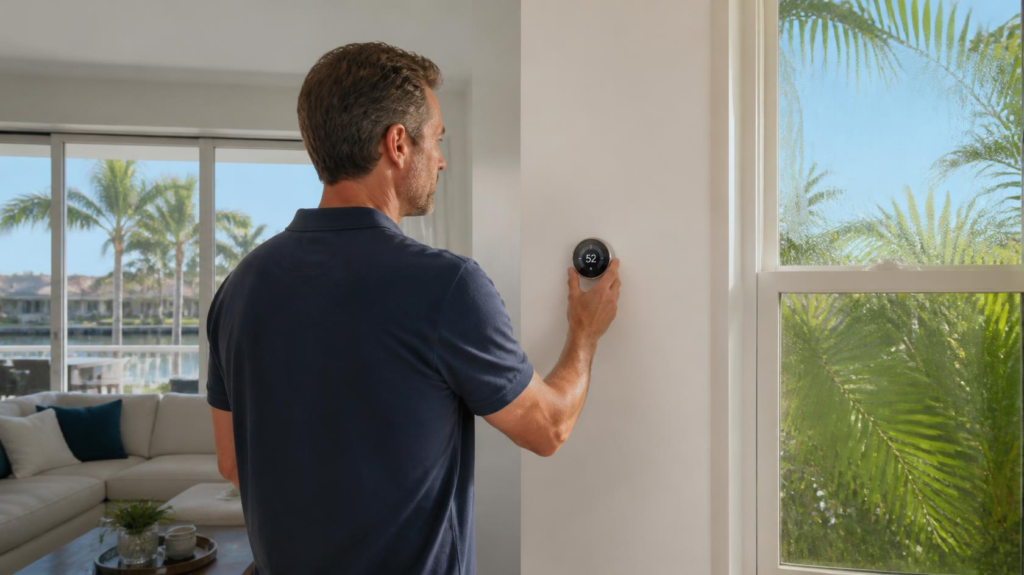
You walk into your home, check the thermostat, and everything appears normal.
The AC is running.
The temperature says 74°F.
But something still doesn’t feel right.
The air feels heavy. Floors may feel slightly damp. Bedding doesn’t feel as fresh as usual, and lowering the thermostat doesn’t seem to solve the problem.
Welcome to one of the most common comfort challenges in Florida:
Excess indoor humidity.
Your air conditioner isn’t only responsible for cooling your home. In Florida’s humid climate, removing moisture from the indoor air is also an essential part of keeping your home comfortable.
So why can a house still feel humid when the AC is running?
Let’s look at the most common reasons.
Your AC Does More Than Lower the Temperature
When warm indoor air passes over your HVAC system’s cold evaporator coil, two things happen.
The air temperature drops, and moisture condenses out of the air.
That moisture eventually exits through the condensate drainage system.
This means your AC is performing two jobs simultaneously:
Cooling + Dehumidification
When something interferes with that process, your thermostat may show the correct temperature while the home still feels uncomfortable.
What Should Indoor Humidity Be in a Florida Home?
There’s no single perfect humidity percentage for every household, but excessive indoor humidity should be investigated.
You can monitor relative humidity with a thermostat that includes humidity readings or an inexpensive indoor hygrometer.
If your home regularly feels sticky or clammy despite reaching the thermostat setting, your HVAC system and the home’s moisture sources deserve a closer look.
1. Your AC May Be Oversized
This surprises many homeowners.
A larger air conditioner isn’t necessarily better.
An oversized AC can cool the home extremely quickly. That sounds beneficial, but it may create a problem called short cycling.
The system reaches the thermostat temperature quickly and shuts down.
Because it doesn’t operate long enough, it may not remove enough moisture from the indoor air.
The result?
A home that’s technically cool but still feels humid.
This is one reason professional HVAC sizing is so important in Florida.
2. Your AC Isn’t Running Long Enough
Even if the equipment isn’t dramatically oversized, frequent short cycles can reduce moisture removal.
Short cycling can be associated with several conditions, including:
- Improper equipment sizing
- Thermostat issues
- System problems
- Restricted airflow
- Equipment performance issues
If you notice your AC turning on and off repeatedly for short periods, schedule an HVAC inspection rather than assuming it’s normal.
3. Dirty Evaporator Coils
Your evaporator coil is essential to both cooling and moisture removal.
Over time, dirt and debris can accumulate on the coil and interfere with heat transfer.
That can reduce the system’s ability to operate efficiently and affect overall comfort.
Professional HVAC maintenance includes inspecting critical components and identifying conditions that may be reducing system performance.
4. Restricted Airflow
Air needs to move correctly through the HVAC system for effective cooling and humidity control.
Restricted airflow may result from:
- Dirty air filters
- Blocked return vents
- Dirty coils
- Duct problems
- Blower issues
Simply replacing a severely dirty filter can sometimes make a noticeable difference, but persistent airflow problems should be professionally diagnosed.
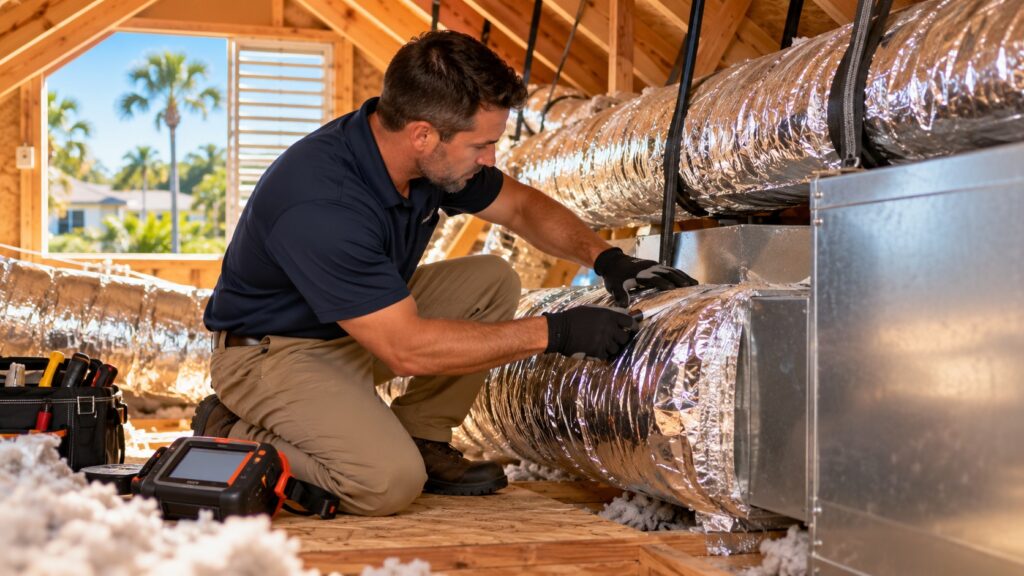
5. Leaky Ductwork
Florida homes often have ductwork running through hot attics or other unconditioned areas.
If those ducts leak, the HVAC system may lose conditioned air or pull unwanted hot, humid air into the system.
This can create multiple problems:
- Reduced comfort
- Higher energy consumption
- Uneven room temperatures
- Longer AC operation
- Humidity problems
If your AC appears to work correctly but some rooms remain uncomfortable, ductwork should be part of the investigation.
6. Your Home May Have Air Leaks
Your HVAC system isn’t always the source of the problem.
Outdoor humidity can enter through gaps and leaks around:
- Doors
- Windows
- Attic access points
- Plumbing penetrations
- Exterior openings
- Poorly sealed construction joints
Your AC then has to fight both heat and the additional moisture entering the home.
This is why whole-home comfort requires looking beyond just the condenser outside.
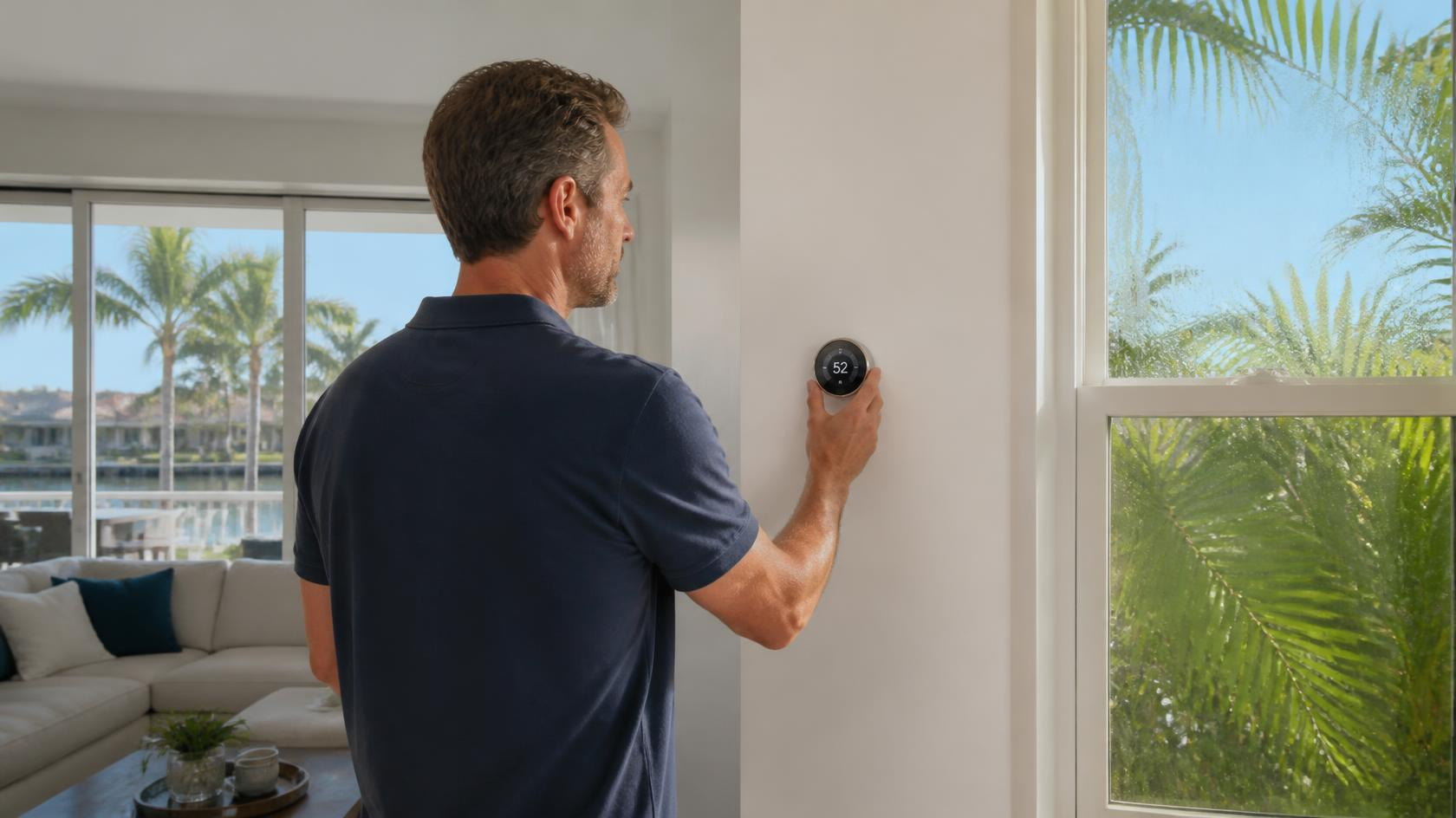
7. Your Thermostat Setting May Be Working Against You
Constantly lowering the thermostat isn’t necessarily the best way to solve a humidity problem.
Temperature and relative humidity are related, but an uncomfortable humidity issue should be addressed at its source.
Modern thermostats and HVAC controls can provide much better information about what’s happening inside the home than traditional temperature-only thermostats.
Some systems can also prioritize humidity control depending on their configuration.
8. Your AC May Need Maintenance
A system doesn’t have to completely stop cooling before something is wrong.
It may continue reaching the desired temperature while gradually losing performance.
Possible warning signs include:
- Longer cooling cycles
- Increasing energy bills
- Weak airflow
- Unusual noises
- Water around the indoor unit
- Musty odors
- Frequent cycling
- Increasing indoor humidity
Preventive HVAC maintenance allows a technician to identify developing problems before they become complete system failures.
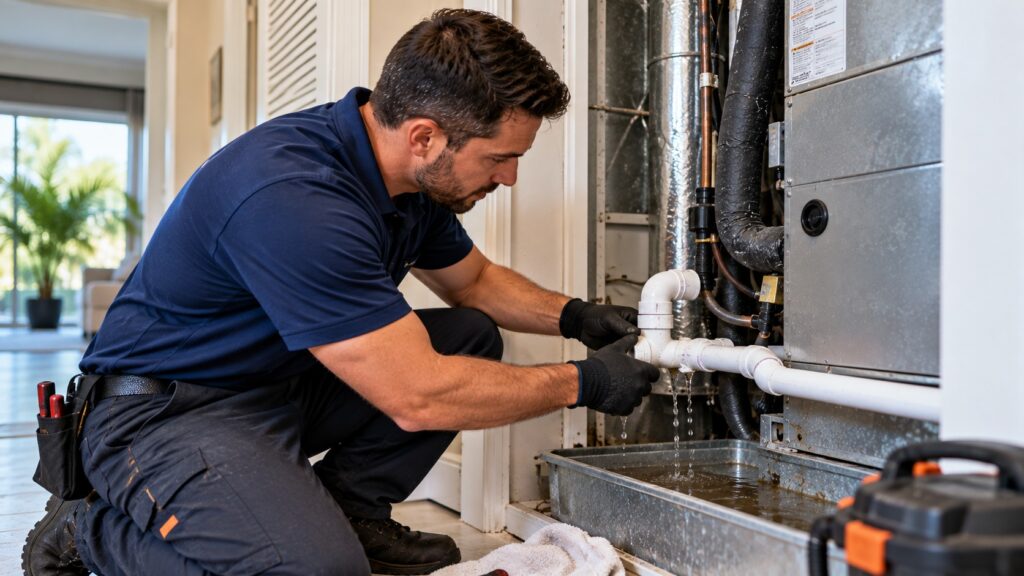
9. The Condensate Drain May Have a Problem
Remember the moisture your AC removes from the air?
It has to go somewhere.
Condensation collected by the HVAC system normally drains away through the condensate line.
In Florida’s warm, humid environment, drain lines can develop buildup or clogs.
A drainage problem may lead to water accumulation, system shutdowns, leaks, or other moisture-related issues.
If you notice water around your indoor HVAC equipment, don’t ignore it.
10. Florida Weather Is Simply Extremely Humid
Sometimes the system is working, but outdoor conditions are placing an unusually high moisture load on the home.
Florida’s combination of heat, rain, and humidity can challenge HVAC systems for much of the year.
The home’s insulation, air sealing, windows, ductwork, equipment size, and ventilation all influence how effectively that moisture is controlled.
That’s why two homes on the same street can have completely different indoor humidity levels.
Would a Dehumidifier Help?
In some Florida homes, yes.
A whole-home dehumidification solution can work alongside the HVAC system to provide additional moisture control.
However, installing additional equipment shouldn’t be the first response to every humidity problem.
First, determine why the humidity is high.
If the real issue is leaking ducts, incorrect HVAC sizing, restricted airflow, or equipment malfunction, those problems should be addressed.
After evaluating the complete system and home environment, an HVAC professional can determine whether additional humidity control would provide meaningful benefits.
Why Humidity Control Matters Beyond Comfort
High indoor humidity isn’t just uncomfortable.
Persistent moisture can contribute to conditions that encourage:
- Musty odors
- Condensation
- Mold and mildew growth
- Damage to some furnishings and finishes
- Poor indoor comfort
- Increased strain on cooling equipment
Managing moisture is therefore an important part of protecting both comfort and the indoor environment.
Don’t Just Keep Lowering the Thermostat
One of the most common reactions to a humid home is:
“I’ll just turn the AC down another two degrees.”
That may make the house colder without solving the underlying moisture issue.
It can also increase energy use.
If your home feels uncomfortable at a temperature that should normally feel cool, the better approach is to investigate humidity, airflow, HVAC performance, and potential moisture infiltration.
A Florida HVAC System Should Be Designed for Florida Conditions
Central Florida presents unique cooling challenges.
An HVAC system needs to manage:
- High outdoor temperatures
- Long cooling seasons
- High humidity
- Intense solar heat
- Attic temperatures
- Frequent storms
- Heavy seasonal AC usage
Proper sizing, installation, maintenance, duct design, and airflow all work together.
That’s why simply comparing AC tonnage or equipment price doesn’t tell the whole story when choosing a system.
Professional Humidity & HVAC Diagnostics in Orlando
If your home feels humid even while the air conditioner is running, Air Koncept can evaluate your HVAC system to help identify the cause.
A professional assessment may include examining:
- HVAC operation
- Airflow
- Evaporator coil condition
- Filters
- Thermostat operation
- Drainage
- Ductwork
- Equipment sizing and performance
Identifying the actual cause helps avoid spending money on solutions that don’t address the real problem.
Final Thoughts
A Florida home shouldn’t feel sticky and uncomfortable simply because it’s humid outside.
Your HVAC system plays an important role in controlling both temperature and moisture.
If the temperature looks right but your home still feels humid, something may be preventing the system from managing moisture effectively.
It could be as simple as airflow restriction—or involve equipment sizing, duct leakage, maintenance issues, drainage, or moisture entering the home.
The key is diagnosing the cause rather than simply lowering the thermostat.
Is Your Orlando Home Feeling Too Humid?
Don’t settle for a home that’s cold but still uncomfortable.
Contact Air Koncept for professional HVAC diagnostics, maintenance, and indoor comfort solutions throughout Orlando and surrounding Central Florida communities.
Call Air Koncept: (407) 928-4595
Frequently Asked Questions
Why is my house humid even though the AC is running?
Possible causes include an oversized AC, short cycling, restricted airflow, dirty coils, duct leakage, equipment problems, or excessive outdoor moisture entering the home.
Does an air conditioner remove humidity?
Yes. During normal cooling operation, moisture condenses on the evaporator coil and is drained away from the system.
Can an oversized AC cause high humidity?
Yes. An oversized system may cool a home too quickly and shut off before operating long enough to remove sufficient moisture.
Will lowering my thermostat reduce humidity?
Not necessarily. Lowering the temperature may increase energy use without addressing the cause of excessive indoor humidity.
Can dirty air filters affect humidity?
A severely dirty filter can restrict airflow and reduce HVAC performance, potentially contributing to comfort and humidity problems.
Do Florida homes need dehumidifiers?
Some homes can benefit from whole-home dehumidification, but an HVAC professional should first determine whether high humidity is caused by another issue such as equipment sizing, airflow, duct leakage, or maintenance problems.
Get Fast, Professional HVAC Service in Orlando
Ready to schedule your HVAC service or need emergency repair? Air Koncept is here to help with all your heating and cooling needs throughout the Orlando metro area.
📞 Call Now: (407) 928-4595
📧 Email: info@airkoncept.com
🏢 Office: 518 Douglas Ave, Suite 1224, Altamonte Springs, FL 32714
Business Hours:
• Monday – Friday: 8:00 AM – 6:00 PM
• Emergency Service: Available 24/7
• Weekend Appointments: Available upon request
Response Times:
• Emergency Calls: Within 2 hours
• Scheduled Service: Same or next day
• Free Estimates: Within 24 hours
What to Expect When You Call:
1. Friendly, knowledgeable staff will answer your call
2. We’ll discuss your HVAC needs and schedule service
3. Receive confirmation via text or email
4. Licensed technician arrives on time with upfront pricing
Service Areas:
We proudly serve Orlando, Winter Park, Altamonte Springs, Longwood, Oviedo, Sanford, Lake Mary, Casselberry, Kissimmee, Davenport, Winter Garden, Windermere, Ocoee, Apopka, Hunters Creek, and Lake Nona.
Payment Options:
✓ Cash, Check, All Major Credit Cards
✓ Financing Available (Subject to Credit Approval)
✓ Senior and Military Discounts Available
Send Us Message
Start the conversation to established good relationship and business.