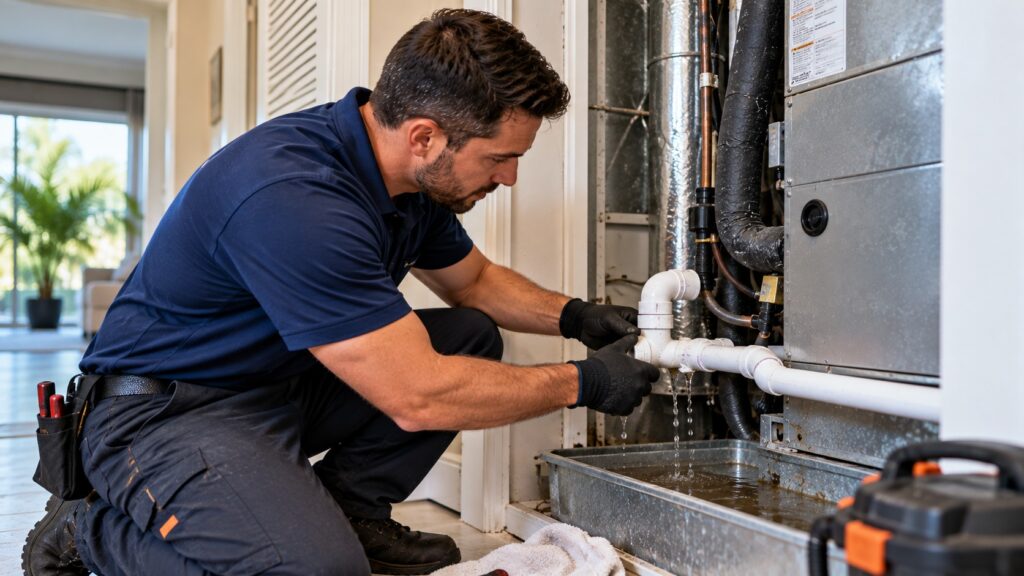
One bedroom is always warmer than the rest of the house. The thermostat looks normal, but your AC seems to run forever. Your electric bill keeps climbing even though your habits have not changed much.
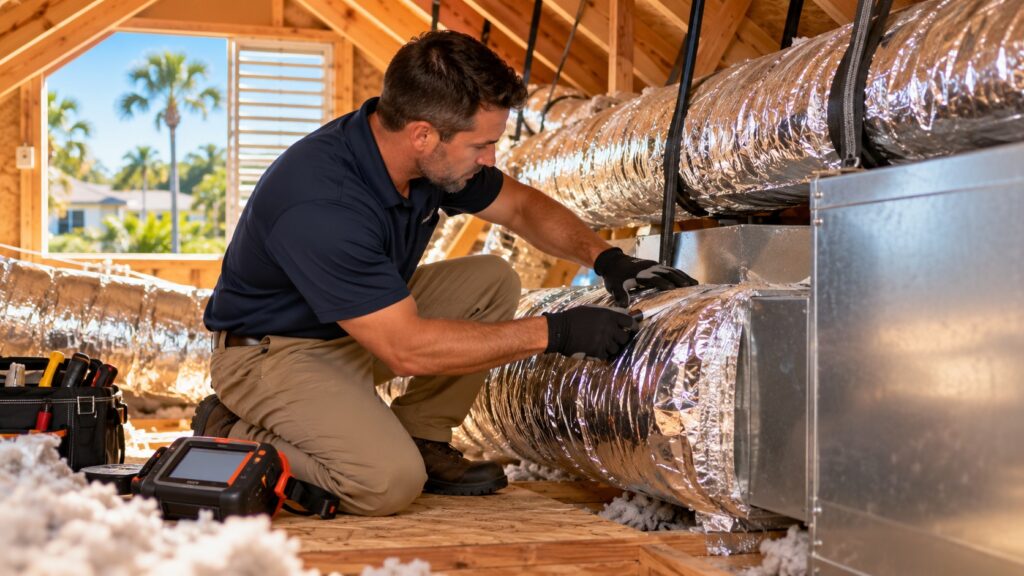
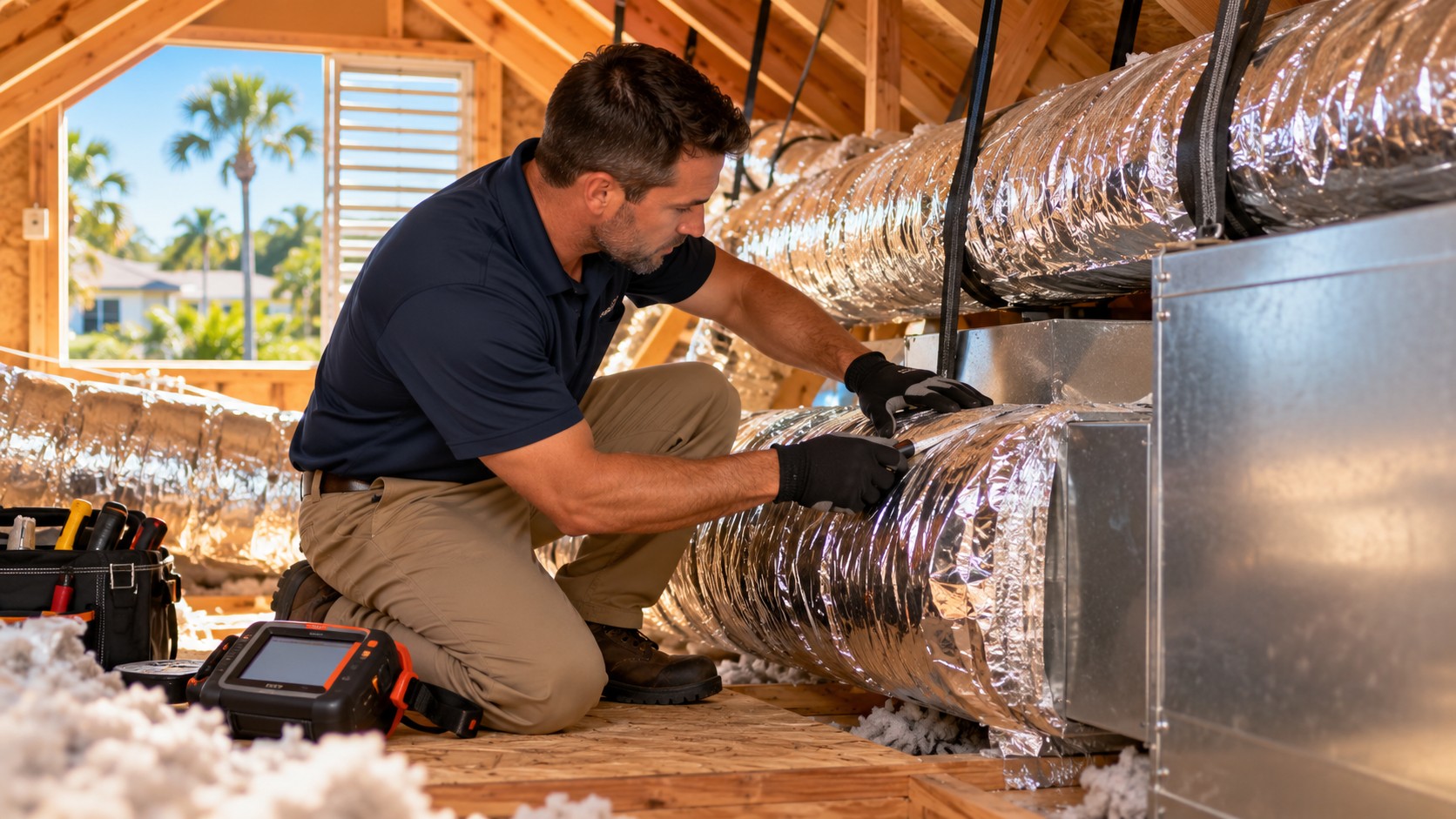
Leaky or disconnected attic ductwork can waste conditioned air before it ever reaches the rooms in your home.
Homeowners often assume the air conditioner itself is failing. Sometimes the real problem is hidden above the ceiling: the ductwork.
In many Central Florida homes, ducts travel through extremely hot attic spaces. When those ducts leak, separate or become damaged, conditioned air can be lost before it reaches the rooms you are trying to cool.
Why Attic Ductwork Matters So Much in Florida
Your HVAC system can produce properly cooled air and still leave the house uncomfortable if that air is not delivered effectively. Ducts are the distribution network connecting the air handler to bedrooms, living areas and other conditioned spaces.
When duct connections are tight and the system is properly designed, airflow reaches the home as intended. When ducts leak in an attic, some of the cooling you paid for may never make it indoors.
1. One or More Rooms Stay Hot
Persistent hot spots are one of the most noticeable signs of a distribution problem. A room far from the air handler may receive less airflow because of a damaged branch duct, poor connection, restriction or design issue.
Uneven temperatures can have several causes, so ductwork should be evaluated as part of the complete HVAC system rather than diagnosed from temperature alone.
2. Your AC Runs Longer Than Expected
If cooled air is escaping into the attic, the thermostat may take longer to reach its target. The air conditioner then continues operating to compensate for the lost capacity.
Long runtime can also be caused by equipment or building-envelope problems, which is why professional diagnostics are valuable.
3. Energy Bills Rise Without an Obvious Reason
Cooling a Florida home already requires substantial work. Losing conditioned air through duct leaks adds unnecessary load to the system.
If energy use rises while thermostat settings and household routines remain similar, an HVAC inspection can help identify whether airflow, equipment performance or duct leakage is contributing.
4. Airflow Feels Weak at Certain Vents
Compare airflow between rooms. A noticeably weak supply vent can point toward a duct restriction, disconnection or other distribution issue.
Do not close multiple vents in an attempt to force more air elsewhere. HVAC systems are designed around airflow requirements, and major changes can create new problems.
5. Dust Appears Around Registers
Dust around vents does not automatically prove a duct leak, but unusual dust patterns combined with airflow and comfort problems are worth investigating. Return-side leaks may draw air from unconditioned spaces into the HVAC system.
Leaky Ducts vs. Dirty Ducts
These are different problems. Duct cleaning addresses contaminants and debris inside the duct system when cleaning is appropriate. Duct sealing or repair addresses openings, failed connections and damaged sections that allow air to escape or unwanted air to enter.
A professional inspection should identify the actual condition before recommending a service.
Why Simply Buying a Bigger AC Is Not the Answer
If ductwork is the real problem, installing a larger air conditioner without correcting the distribution issue may not solve comfort concerns. Proper HVAC performance depends on equipment sizing, airflow and duct design working together.
This is especially important when replacing an older system. Evaluating the ducts before or during replacement can help the new equipment perform as intended.
What a Professional Duct Inspection Looks For
An HVAC technician may inspect accessible duct sections, connections, plenums, insulation condition, airflow and visible signs of leakage or damage. The exact diagnostic process depends on the home and system.
The objective is to determine whether the ducts are contributing to uneven cooling, wasted energy or poor system performance.
Can Duct Problems Affect Indoor Air Quality?
Potentially. Leaks on the return side of a system can draw air from attics or other unconditioned spaces. Duct damage may also expose the system to dust and debris.
Indoor air quality has many possible influences, so the right solution begins with identifying the source rather than assuming duct cleaning alone will solve every issue.
Professional Duct and HVAC Service in Orlando
Air Koncept provides duct cleaning, HVAC diagnostics, maintenance, repair and installation services throughout Orlando and surrounding Central Florida communities. If rooms are difficult to cool or your system seems to work harder than it should, our team can evaluate both the equipment and the air-distribution system.
Dealing with hot rooms or weak airflow? Call Air Koncept at (407) 928-4595 to schedule an HVAC evaluation.
Frequently Asked Questions
Can leaking ducts make one room hotter than another?
Yes. A damaged or disconnected duct branch can reduce the amount of conditioned air reaching a specific room.
Do leaky ducts increase energy bills?
They can. When conditioned air escapes before reaching the living space, the HVAC system may need to run longer to maintain the thermostat setting.
Is duct cleaning the same as duct sealing?
No. Cleaning addresses debris or contaminants inside ducts, while sealing and repair address leaks, openings and damaged connections.
Should ductwork be checked when replacing an AC?
It can be valuable to evaluate the distribution system during replacement so new equipment is not connected to unresolved airflow or leakage problems.